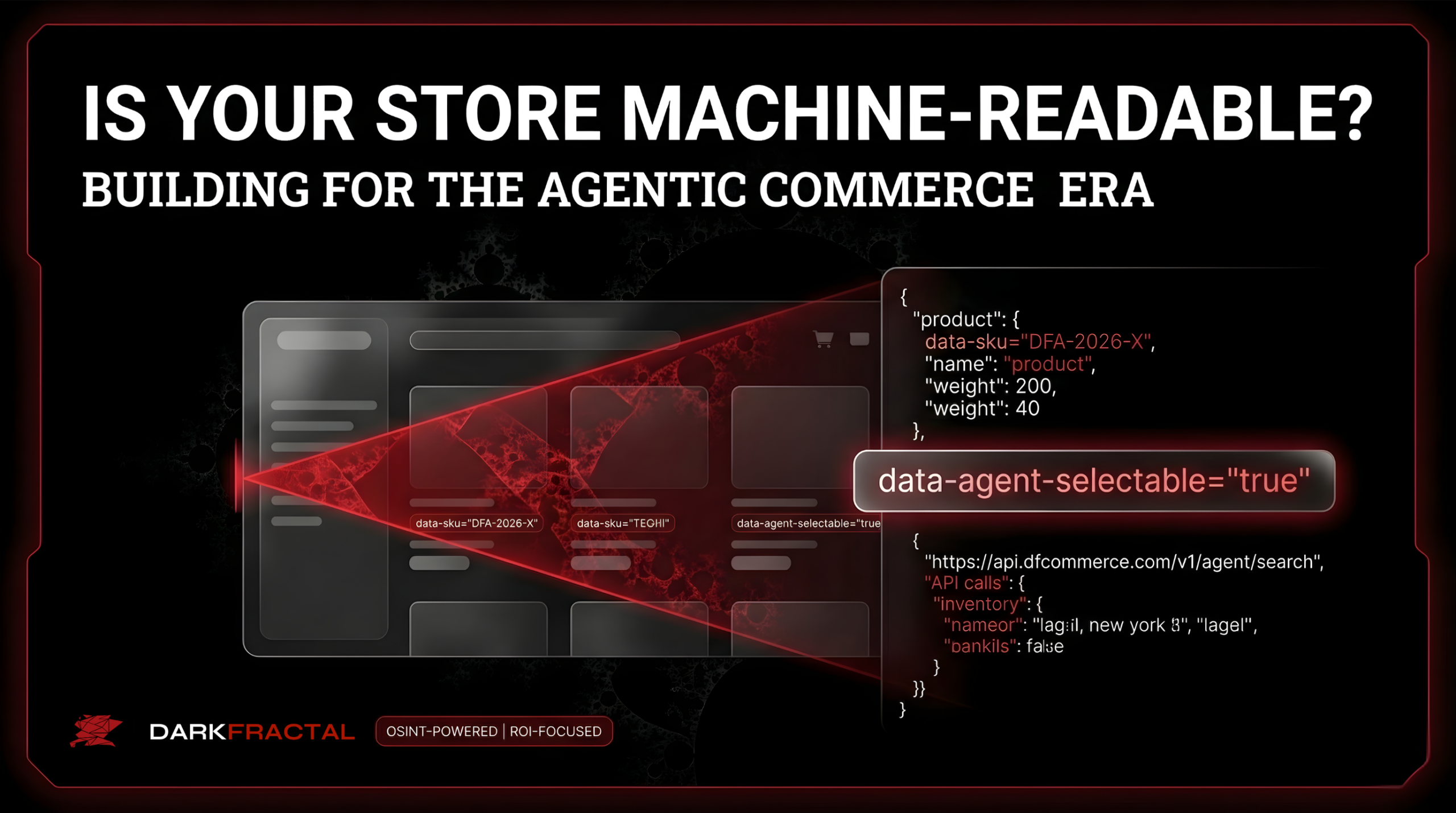
SEO is no longer just about Google; it’s about AEO (Answer Engine Optimization). Welcome to March 2026. If an AI agent can’t “read” your inventory and “negotiate” a checkout in under 200ms, your store doesn’t exist.
We recently reverse-engineered the top 50 ‘MACH’ (Microservices, API-first, Cloud-native, Headless) stores and found a glaring, common failure point: API opacity. This week, we are breaking down the shift from standard headless setups to Agentic-Ready Composable Commerce, and showing you exactly how to build the gateways that allow bots to discover and purchase your products autonomously.
1. The Trend: The “Machine Discovery” Era
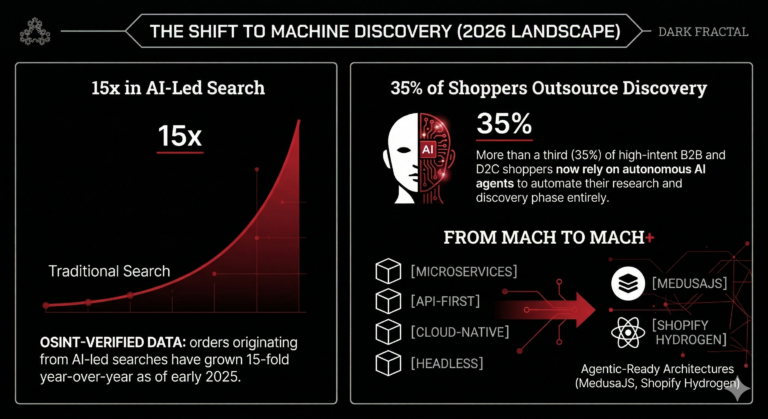
While 2024 and 2025 were obsessed with decoupled frontends and page load speeds, the meta has shifted. Brands are aggressively migrating to architectures optimized for AI Shopping Agents—specialized shopper bots, Gemini, and ChatGPT variants that research, compare, and execute purchases autonomously.
The Data speaks for itself:
-
Orders originating from AI-led searches have surged 15x year-over-year as of early 2026.
-
35% of high-intent B2B and D2C shoppers now entirely outsource the discovery phase to AI agents.
If your catalog isn’t “Agentic-Ready,” you are invisible to the bots driving this traffic. The new dominant infrastructure is MACH+ (MACH + Agentic), heavily utilizing platforms like MedusaJS and Shopify Hydrogen.
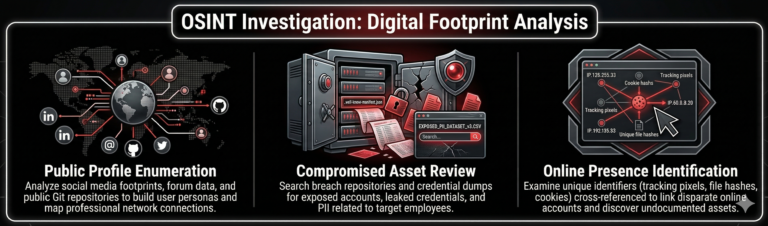
2. OSINT Technical Analysis: Reverse-Engineering Agentic Readiness
How do you know if your competitors are optimized for the 2026 AI economy? You unmask their infrastructure.
Passive OSINT (Infrastructure Mapping)
-
BuiltWith / Wappalyzer: Look for the “Agentic Signal.” The presence of Vercel Edge Functions or Cloudflare Workers positioned directly alongside GraphQL endpoints is a strong indicator of AI-focused edge computing.
-
Shodan / Censys: Search for public-facing subdomains built for machines, such as
agent-gateway.*,discovery.*, orai-search.*. Scan for open OpenAPI/Swagger documentation (e.g.,api.brand.com/v1/docs). -
Google Dorking: Use targeted queries to find hidden configuration files that shopping bots use to understand a store’s rules. Try:
-
filetype:json "ai-plugin" site:competitor.com -
inurl:.well-known/ai-agent-manifest.json
-
Active Scraping (API Interception)
Forget scraping HTML <div> tags; that’s legacy behavior. Today’s play involves intercepting Universal Commerce Protocol (UCP) requests—the new standard for agent-to-store communication.
-
The Play: Deploy Python + Playwright to capture XHR/Fetch traffic. You are looking for requests to
/graphqlthat include specific bot headers likeX-Agent-IntentorAccept: application/agent+json.
3. Developer Blueprint: The Agentic Gateway
To capitalize on this traffic, you need an “Agentic Gateway”—a translation layer that makes your commerce backend natively readable by AI. Here is your starting blueprint.
A. The Data Structure (Agentic Discovery JSON)
Your store must emit a machine-readable “Manifest.” Think of this as the robots.txt of 2026. Host this at /.well-known/commerce-agent.json.
{
  "agent_protocol_version": "2.1",
  "capabilities": ["discovery", "negotiation", "bulk_purchase"],
  "endpoints": {
    "catalog_search": "https://api.dfcommerce.com/v1/agent/search",
    "real_time_inventory": "https://api.dfcommerce.com/v1/agent/stock",
    "secure_checkout": "https://api.dfcommerce.com/v1/agent/checkout"
  },
  "auth_method": "OAuth2_Delegated_Agent"
}
B. The Implementation (Python + FastAPI)
Use AI tools like Cursor to build an “Intent-to-Query” bridge. This translates a bot’s natural language request into a precise GraphQL query for your backend (MedusaJS/Shopify).
import google.generativeai as genai
from fastapi import FastAPI

app = FastAPI()
genai.configure(api_key="YOUR_GEMINI_API_KEY")

@app.post("/v1/agent/search")
async def agent_search(intent: str):
    # Gemini acts as the 'Query Architect'
    model = genai.GenerativeModel('gemini-2.5-flash')

    prompt = f"""
    Translate this AI Agent intent into a MedusaJS GraphQL query:
    Intent: "{intent}"
    Requirement: Return product name, SKU, real-time price, and shipping estimate.
    Output: ONLY the raw GraphQL string.
    """

    graphql_query = model.generate_content(prompt).text

    # Execute query against your Headless Backend (Medusa/Shopify)
    # result = execute_backend_query(graphql_query)

    return {"status": "success", "query": graphql_query}
C. The “Machine-Readable” UI (HTML/CSS)
Your frontend still matters, but it needs “Agent-Visuals”—structured data attributes embedded directly in the code alongside the latest UI trends.
<div class="product-wrapper"
     data-agent-selectable="true"
     data-sku="DFA-2026-X"
     data-currency="USD">
  <h1 class="visual-title">Strategic B-Plan Template</h1>
  <p class="price">$199.00</p>

  <style>
    /* 2026 'Glassmorphism' UI trend */
    .product-wrapper {
      background: rgba(255, 255, 255, 0.05);
      backdrop-filter: blur(15px);
      border: 1px solid rgba(255, 255, 255, 0.1);
      padding: 3rem;
      border-radius: 24px;
    }
  </style>
</div>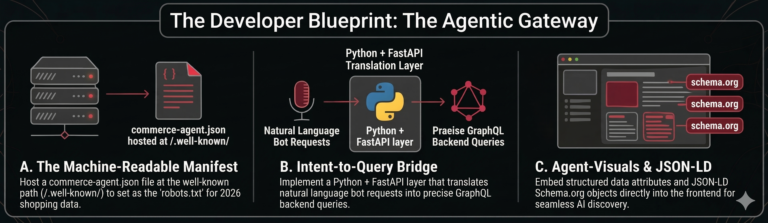
4. The Actionable Playbook: What to Do Today
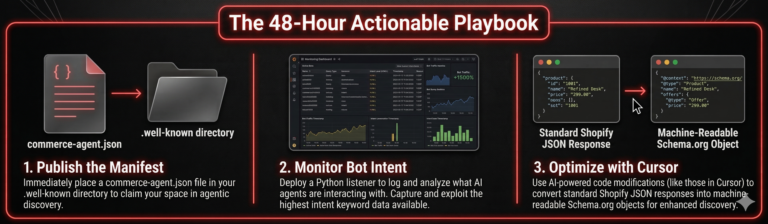
Don’t wait until you are fully invisible to the machine economy. Start with these three steals:
-
Publish the Manifest: Place a
commerce-agent.jsonfile in your.well-knownfolder right now. Claim your space in agentic discovery. -
Monitor “Bot Intent”: Adapt the Python listener script above to log exactly what AI agents are searching for when they hit your site. This is the highest-intent keyword research currently available.
-
Leverage Cursor Workflows: Prompt Cursor’s Composer with: “Convert my current Shopify JSON response into a machine-readable JSON-LD Schema.org object for AI discovery.”
Ready to stay ahead of the architecture curve?
The shift to Agentic Commerce isn’t slowing down. To get weekly deep dives, OSINT teardowns, and developer blueprints delivered straight to your inbox, [Book A Call – Subscribe to DF Subscriptions at darkfractal.io]. Build the future before your competitors even understand it.